
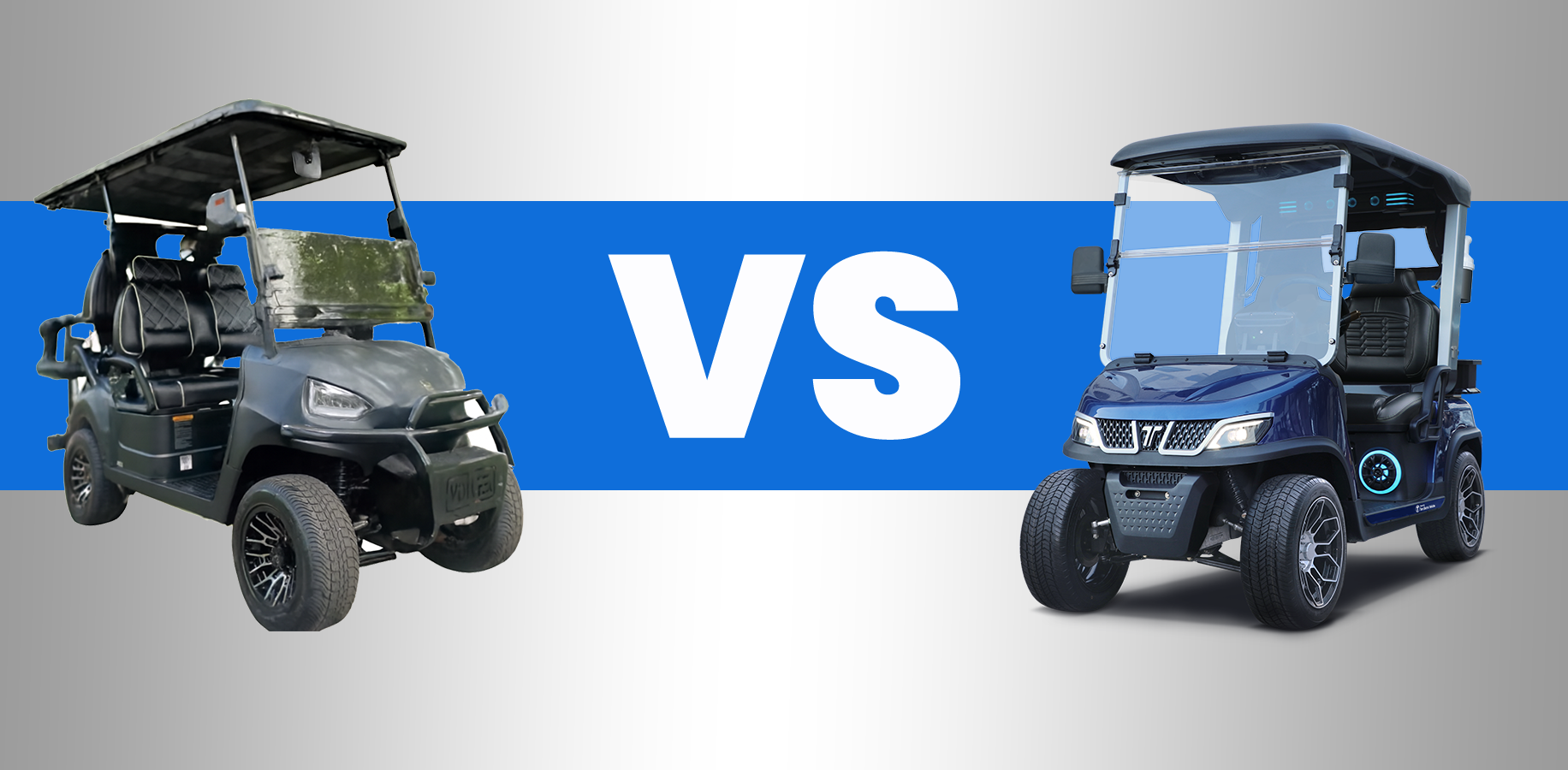
Voyager Golf Carts vs Tara Golf Carts: Features, Build, and Buyer Tips
Voyager and Tara are modern electric carts competing on tech, batteries, and build quality. This guide explains which fits your needs best.
If you’re comparing Voyager golf carts vs Tara golf carts, you’re likely shopping in the upgraded cart category—where buyers expect more than a basic ride. Both brands target customers who want stronger performance, modern dashboards, and a cleaner electric ownership experience. The real decision usually comes down to four practical factors: feature priorities, battery technology (lithium vs other battery types), frame/material choices (aluminum vs steel), and dealer support in your area. Because equipment packages can vary by model and distributor, it’s best to evaluate each cart as a total system instead of chasing one single spec.
Quick Overview: What Each Brand Emphasizes
- Voyager: Often marketed around high-tech lithium setups, aluminum-frame construction in certain models, and higher-voltage systems (commonly referenced as 72V) designed for strong, efficient electric output.
- Tara (by Evolution): Typically positioned as a modern, luxury-leaning electric cart with premium-style options (screens, convenience features such as cooler/fridge-style add-ons), plus solid everyday performance.
Key Differences That Matter in Real Life
1) Battery Technology: Lithium vs Other Battery Types
Battery choice affects daily convenience more than most buyers expect. Many Voyager configurations highlight lithium power as a core identity, which can be appealing if you want consistent output and less day-to-day battery maintenance. Tara also commonly emphasizes lithium as part of a premium component story, but the exact battery type can still vary by trim and dealer build.
Buyer tip: Ask the dealer to confirm the battery brand/spec, charger type, warranty coverage, and expected charging routine. A great cart can feel average if the battery and charger pairing isn’t properly matched.
2) Build and Frame: Aluminum vs Steel
One of the most talked-about distinctions is frame material. Voyager is often associated with aluminum-frame designs in some lines, while many carts in the broader market use steel frames. Aluminum can help with corrosion resistance and weight considerations, while steel can deliver a classic “heavy-duty” feel depending on design and protection coatings.
What to check: Don’t judge only by material. Inspect weld quality, protective coatings, underbody shielding, and how the cart behaves over bumps. Frame design and assembly consistency matter as much as raw material choice.
3) Voltage and Power Delivery (Example: 72V Systems)
Voyager marketing often references higher-voltage systems (commonly 72V), which can correlate with strong electric response and efficient power delivery when engineered well. Tara’s performance emphasis usually highlights a modern drive system and a refined “premium cruiser” experience rather than focusing solely on voltage numbers.
Bottom line: Higher voltage can be a plus, but real-world performance depends on the full drivetrain setup—controller tuning, motor type, gearing, tire size, and overall vehicle weight.
4) Cabin Experience: Screens, Convenience, and Luxury Touches
Tara is frequently discussed for its luxury-oriented cabin features—larger screens, a more modern dashboard feel, and convenience add-ons that can include cooler/fridge-style options depending on configuration. Voyager may also offer modern dashboards and accessory packages, but its brand story often leans harder into battery tech, frame design, and power system identity.
Voyager Golf Carts: Strengths and Best Fit
Voyager is a strong candidate if you’re drawn to lithium-first positioning, higher-voltage performance themes, and the idea of an aluminum-frame cart in certain builds. Buyers who want a more “engineering-driven” pitch—power system, efficiency, and modern electrical architecture—often put Voyager on their shortlist.
Are Voyager golf carts good?
They can be a great choice when the dealer setup and support are strong and the cart configuration fits your use case. “Good” in this category usually means: stable steering, predictable braking, clean wiring and accessory installation, and a battery/charger package that performs consistently. Since trims and builds can vary, the best way to judge Voyager is a test drive plus a close inspection of assembly details and warranty coverage.
Tara Golf Carts: Strengths and Best Fit
Tara’s appeal is often a blend of modern technology and an upscale ownership feel. If you want a cart that looks refined and feels like a premium electric ride—complete with advanced interface features—Tara tends to align with that preference. It’s also often positioned with solid performance as a baseline, then enhanced with comfort and convenience options.
If you want to explore the latest configurations directly, see tara golf carts.
Are Tara golf carts good quality?
Tara carts are commonly positioned as quality-focused, but the smartest way to evaluate “good quality” is to check the details that affect long-term satisfaction: fit and finish, wiring cleanliness, suspension noise over bumps, braking smoothness, and warranty/service responsiveness. A premium cart should feel solid at low speeds and remain quiet and stable on imperfect pavement. Also confirm what’s included in the warranty and who performs service locally—quality ownership is a mix of build and support.
Head-to-Head Checklist (Use This Before You Buy)
- Test drive on the same route: turns, bumps, and stops. Pay attention to steering comfort and brake confidence.
- Confirm the battery package: lithium vs other types, battery brand/spec, charger compatibility, and warranty terms.
- Inspect the underside: look for clean cable routing, protected lines, and solid fastener work.
- Compare frame protection: coatings, corrosion prevention, and build quality—not just aluminum vs steel.
- Ask about service logistics: who services it, parts lead times, and typical turnaround for warranty claims.
- Compare “must-have” features: screen size, lighting, storage, seating, and any convenience add-ons.
Final Recommendation
Choose Voyager if you prioritize lithium-focused engineering, high-voltage performance themes (such as 72V systems), and you like the idea of aluminum-frame construction in certain builds—especially if a trusted dealer supports the product locally. Choose Tara if you want a more upscale, tech-forward experience with luxury touches like advanced screens and convenience features, while still expecting solid everyday electric performance.
Because build packages can vary, the best answer is the simplest: test drive both and pick the one that feels best to you. When steering comfort, braking feel, and dealer support align with your needs, either brand can be an excellent long-term choice.



Add a review
Your email address will not be published. Required fields are marked *